Why a Scene Changes When an Actor Crosses the Stage
Stage crossing changes how an audience reads a scene. Learn to shape attention, clarify relationships and give unchanged dialogue a different force.
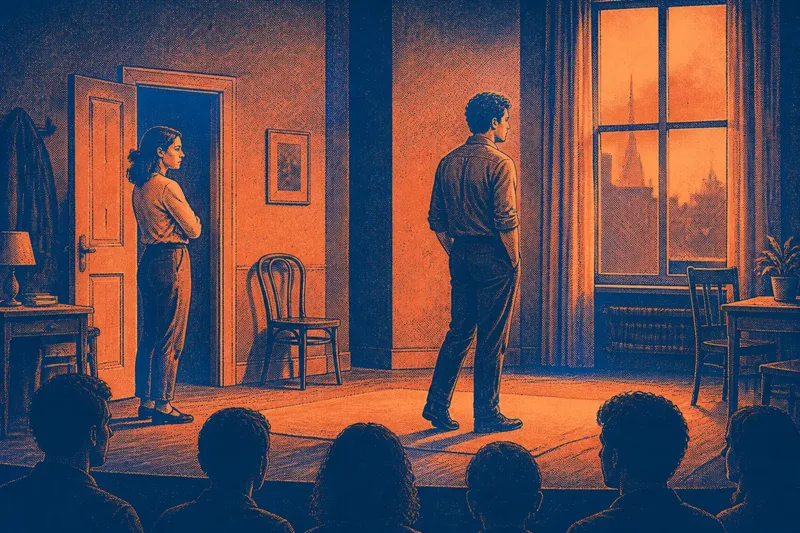
A stage cross can make the same line feel like a challenge, a retreat or an invitation. Its effect comes from the new distance between performers, the audience’s shifting focus and what becomes visible when the actor stops.
Movement is not simply travel from one mark to another. It changes the arrangement of the scene, so a useful rehearsal question is not only “Where does the actor go?” but “What becomes different when they arrive?”
Stage crossing changes relationships and focus
A stage cross changes the visible relationship between performers. Moving towards someone may suggest pressure or interest; moving away may suggest withdrawal or a deliberate change of subject. These are possibilities, not fixed meanings: timing, intention and the other actor’s response shape what an audience reads.
Position also affects who is easiest to watch. A performer who moves into a clear sightline may draw attention from a still actor, while a route behind furniture or another body can obscure a face or reaction. The choice matters especially when the audience needs to see a listener’s response.
Say two characters are near a doorway after one asks a difficult question. Imagine the questioner crosses towards a window and stops while the other remains by the door; the new distance may make the question seem easier to evade. If the questioner instead moves towards the other character and stops within conversational distance, the same words may feel harder to dismiss. The starting positions, route and stopping point are invented here to show how a changed stage picture can alter the exchange, not to prescribe a single interpretation.
Stage crossing redirects the audience’s attention
Movement can draw the eye, particularly when the rest of the stage is still. An audience may follow the crossing and then reassess the scene when it ends. If another performer speaks during the move, decide whether the action supports that line or competes with it.
Focus is not the same as volume or importance. A still actor may hold attention when their face and reaction are clear, while a moving performer may distract from dialogue that needs close listening. The aim is to guide attention, not to make every movement prominent.
In rehearsal, try starting the cross before the line, during it and after it. Notice whether each timing sharpens the exchange or hides a reaction. A pause after the move can let the changed picture register; if it breaks the dialogue’s momentum, try a more continuous transition.
Stage crossing has no fixed directional meaning
Moving towards someone can suggest interest, pressure, intimacy or confrontation. Moving away can suggest avoidance, independence or a change of subject. The same direction can serve different purposes, depending on what the character wants and how the other performer responds.
Connect the movement to an immediate intention rather than assigning it a universal meaning. An actor might cross to hear better, block an exit, inspect an object or stop being watched. A specific reason gives the action a playable basis while leaving the audience room to interpret its emotional effect.
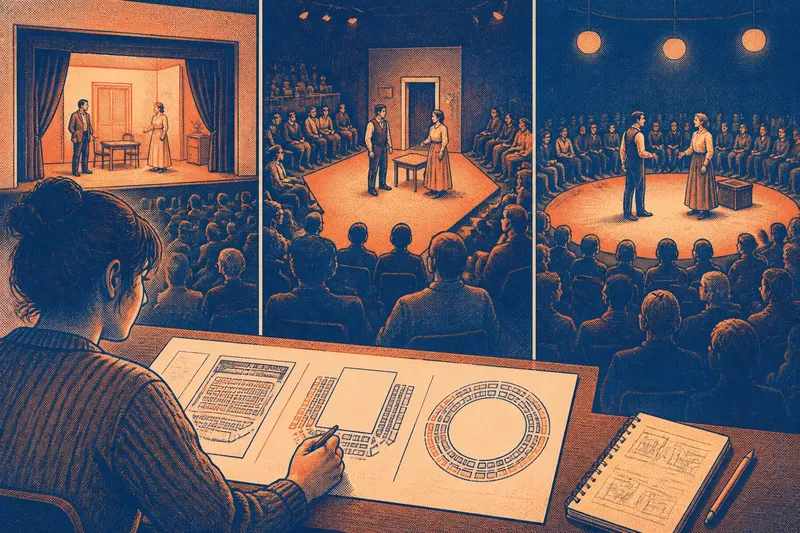
A route also creates different pictures from different seats. A cross that reads clearly from one side of the room may turn an actor’s back to another section. Watch from several viewpoints during rehearsal and check whether faces, gestures and the relationship between performers remain legible.
How can actors make a stage cross feel motivated?
Start with a playable objective: what does the character want now, and why might movement help? “Go to centre stage” names a destination; “keep the other person from reaching the door” gives the actor an intention that can shape the action. Adjust the destination to suit the room and the scene.
Test what prompts the move. Does it begin in response to a word, a silence, a change in the other person’s behaviour or a practical need? A cross that begins too early may announce a decision before the line lands; one that begins too late may feel disconnected from the exchange.
Keep the route clear and repeatable around chairs, tables and loose props. Rehearsal is a place to refine the path, pace and stopping point so the actor can play the intention rather than manage the journey. Follow the production’s agreed arrangements for any movement involving objects or stage conditions.
What should you check when a stage cross does not work?
- Check the trigger. Identify the line, reaction or intention that starts the movement. If one is clear, keep testing its timing; if none is clear, give the actor a specific reason to move or remove the cross.
- Check the listener’s face. Watch whether the audience can see the person receiving an important line. If the reaction is readable, retain the route; if the moving actor hides it, change the path or decide deliberately that the reaction should be concealed.
- Check the route past furniture and props. If the path is clear and repeatable, keep it; if it creates a collision or requires awkward avoidance, reroute the cross or adjust the placement of an item with the production team.
- Check the stopping point. Ask whether the final position creates a useful new relationship. If it does, keep the destination; if it merely completes a journey, try a more purposeful endpoint or let the actor remain still.
- Check the timing against the line. Compare the cross before, during and after the speech. If one version supports the line and keeps the listener visible, retain that timing; if none does, reconsider whether movement belongs there.
- Check the view from different seats. Look from more than one audience position at the faces and gestures that matter. If they remain clear, keep the arrangement; if one is blocked, alter the angle, route or spacing.
Change one element at a time in rehearsal. If you alter direction, pace and destination together, it becomes harder to tell which adjustment changed the scene. A focused change lets actors judge the result through the exchange rather than through abstract rules about where movement belongs.
When should actors stay still instead?
Stillness can concentrate an encounter by giving the audience fewer moving elements to follow. It may expose a character’s difficulty in answering or let a small gesture carry more weight. Crossing is not automatically more expressive than remaining in place.
Ask whether movement adds information that the dialogue and acting do not already provide. If the cross clarifies a change in control, attention or distance, it may sharpen the scene. If it only fills a silence, let the silence work first and see whether the actors’ faces and listening are enough.
What does the audience need to read from a new position?
The audience needs to follow the exchange and notice the change that matters: who approaches, who holds back, who can see whom, and whether the new arrangement shifts the relationship. A movement need not have one obvious interpretation; it should still make the scene’s focus clear.
When a stage crossing feels uncertain, ask what becomes visible, possible or difficult once the actor reaches the new position. That answer can guide the route, pace and stopping point without changing a word. In rehearsal, stage crossing works best when the destination reveals a relationship or choice that the audience could not see as clearly before.